Los límites de la regulación del comercio digital en América Latina: Falta de capacidad técnica e imposición implícita de infraestructura digital extranjera

El comercio digital ha experimentado un rápido crecimiento mundial en la última década, transformando la economía y la sociedad. Mientras que la Unión Europea y otros bloques líderes han avanzado en la regulación de este sector, América Latina enfrenta importantes desafíos. Este artículo examina las limitaciones técnicas, la imposición de estándares tecnológicos extranjeros y la falta de competitividad de la región, considerando su impacto en la regulación del comercio digital.


Booster le commerce digital dans le cadre de la ZLECAf : le défi de l’harmonisation de l’écosystème règlementaire

La Zone de Libre-Échange Continentale Africaine (ZLECAf) qui est opérationnelle depuis 2021 offre une opportunité pour booster le commerce digital africain et pour réaliser le Marché Unique Digital en Afrique. Dans cette perspective, le protocole sur le commerce digital en cours de négociations fait l’objet de toutes les attentes pour l’édification d’un cadre règlementaire propice et harmonisé. L’objectif de cette étude est donc d’analyser l’écosystème règlementaire du commerce digital en Afrique.

Fostering MSMEs digital trade in the AfCFTA context: does digital trade regulations matter?

Despite their positive role towards the development of Africa, MSMEs are still facing restrictive obstacles that are impeding their competitiveness and their ability to seize the opportunities offered by digital trade in the AfCFTA context. After analysing the state of provisions conducive to MSMEs in AfCFTA agreement and their importance, we use the Regional Digital Trade Integration Index (RDTII) recently compute by the United Nations Economic Commission for Africa (UNECA) to investigate the digital trade regulations ecosystem.

NWU WTO–WCP Leadership Celebrates the PhD Achievement of Dr. Marnel Ferreira

Dr. Marnel Ferreira completed her PhD in International Trade in June 2025, under the supervision of Dr. Adelia Jansen Van Rensburg (Promoter) and Dr. Lorainne Ferreira (Co-promoter), both of whom serve as senior academics and active contributors to the WTO Chairs Programme (WTO–WCP) at North-West University. Her doctoral research makes a pioneering contribution to Africa’s digital transformation agenda through the development of a Digital Readiness Index for Africa.

Advancing Digital Integration in the Indo-Pacific Legal Strategies for a Cohesive Digital Economy

The digital economy is guiding cross-border business connectivity, market mechanisms, investments, business incubation, and digital public infrastructure cooperation. In the digital economy ecology, developing economies in the Indo-Pacific need to exchange and cooperate, and synergise their human resource capacities and infrastructure.ERIA and Leiden University have collaborated in a curated study on the inclusive and cooperative digital economy in the Indo-Pacific, Asia, and Europe.

Unlocking growth through the AfCFTA Digital Trade Protocol: a focus on e-commerce in Cameroon

Digital trade is transforming global commerce, lowering transaction costs, connecting businesses across borders and expanding access to new markets. Yet, Africa's participation in this digital revolution remains disproportionately low.

The Impact of Digital Trade Rules on Services Trade : An Empirical Investigation from the DVA Perspective

This paper explores the characteristics and trends of services trade from the perspective of domestic value added (DVA) and examines the impact of digital trade rules on it using bilateral sector‐level panel data among 64 economies from 1996 to 2018. Our research reveals distinct trends of expansion, densification, and de‐modularization of the international services trade relations among economies. Furthermore, leading services exporters basically maintain their dominant positions, demonstrating a clear first‐mover advantage.

Digital trade in Latin America: features of regulation and prospects

The article analyzes the peculiarities of digital trade development and regulation in countries of Latin America and the Caribbean. It indicates regional initiatives for digital trade governance and main difficulties hindering the growth of cross-border etrade and integration of the region into the international digital trade system. The article also examines the participation of Latin American countries in negotiations on aspects of e-commerce regulation within the WTO framework and derives some recommendations on the formation of a regulatory space in the region.

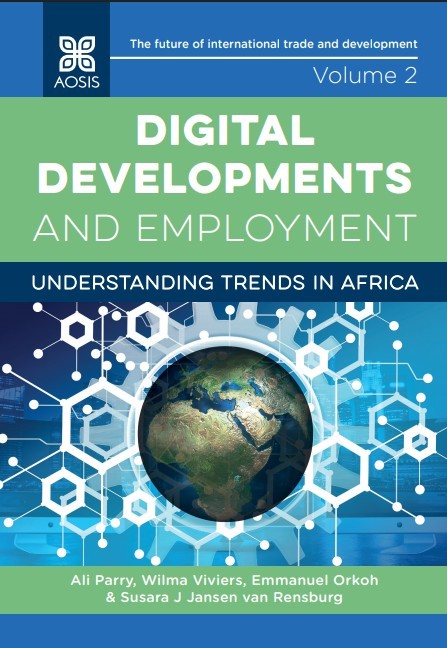
Celebrating Excellence: Ali Parry’s Contributions to the WTO-WCP Programme

Ali Parry at her graduation in December 2022

Ali Parry has been an integral member of the NWU WTO-WCP team since its inception, contributing significantly to every pillar of the Chair’s work — research, capacity building, and outreach. Her academic achievements and professional leadership continue to influence the evolving conversation around Africa’s digital transformation and inclusive development.

Credit Course on International Trade Dynamics: Navigating a Post-Globalized World

The course explores evolving aspects of global trade in dynamic economic landscapes. Participants engage directly with renowned experts and practitioners in international trade law, gaining insights and practical experiences. The curriculum provides a nuanced understanding of contemporary challenges and opportunities in international trade. Upon the successful conclusion of the course, participants will be awarded a Certificate of Completion.