
The Historical Evolution and Socio-Economic Potential of the AfCFTA

The African Continental Free Trade Agreement (AfCFTA) ushers in a significant reorientation of trade dynamics in Africa, away from the international trade framework that was established during colonial times and has lingered on to the present. The operational phase of the AfCFTA was formally launched on July 7, 2019, and commenced in January 2021, with 54 of 55 member states signing the agreement. This historic moment marked the largest number of countries to commit to a trade agreement since the World Trade Organisation was founded in 1995.
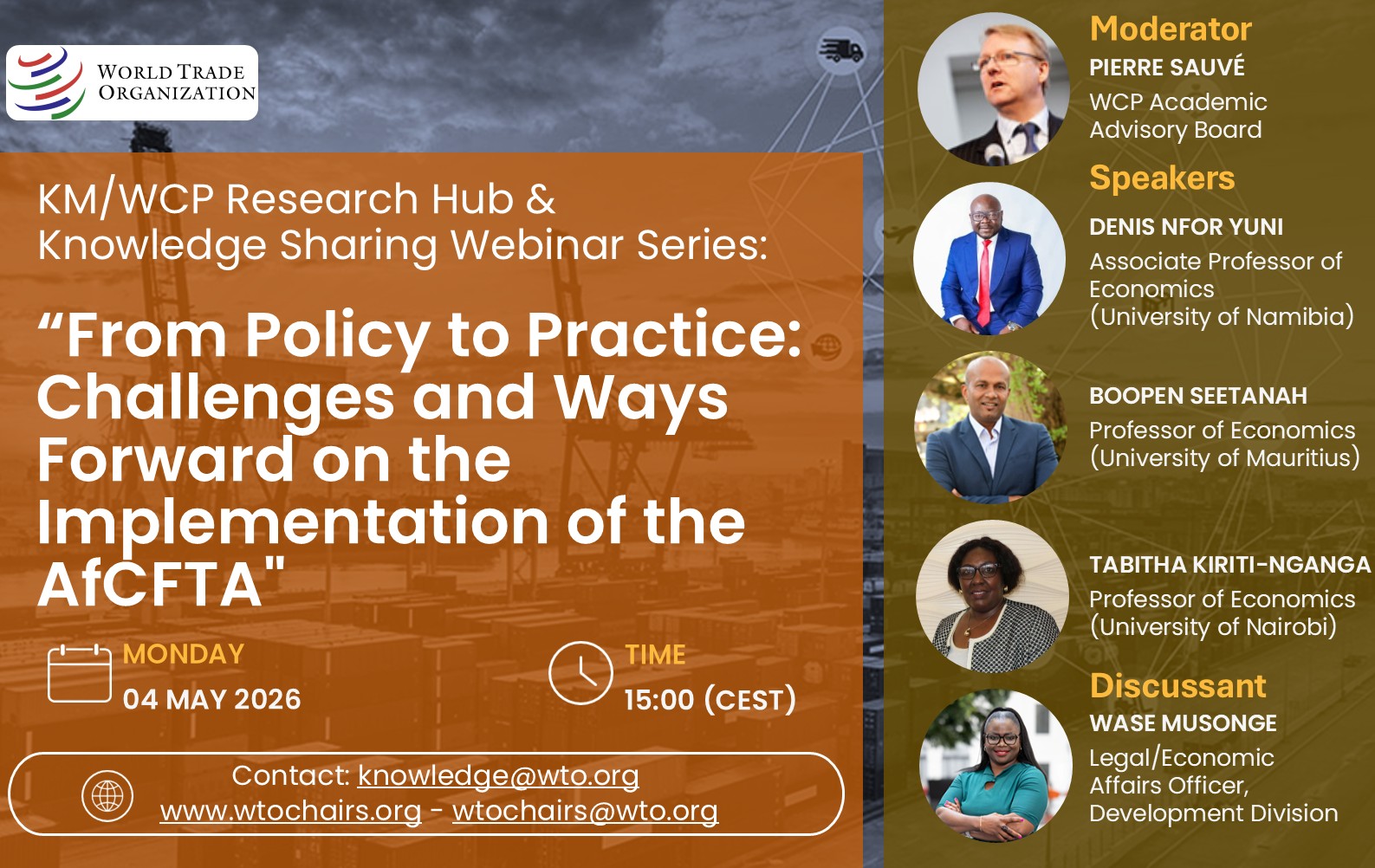
From Policy to Practice: Challenges and Ways Forward on the Implementation of the AfCFTA

This contributed volume takes a country-driven assessment of efforts to implement the African Continental Free Trade Area (AfCFTA). AfCFTA is, arguably, the most prominent attempt to galvanize the continent into political and economic integration in its history.

Exploring the Implementation of the AfCFTA in Morocco: Challenges, Lessons, and Way Forward

This chapter examines the opportunities, constraints, and strategic orientations associated with the implementation of the African Continental Free Trade Area (AfCFTA) in Morocco. It highlights Morocco’s positioning within the dynamics of African integration, assessing both the country’s strengths and the challenges it faces in contributing to the objectives of Agenda 2063 and in successfully incorporating AfCFTA provisions into its trade policy.

Advancing the AfCFTA Agenda in South Africa: Insights and Future Prospects

This paper assesses South Africa’s strategic role in advancing the African Continental Free Trade Area (AfCFTA) and evaluates how it can optimise the agreement’s benefits for continental integration. Although South Africa was instrumental in shaping the AfCFTA framework, its ability to fully leverage the agreement is constrained by persistent domestic challenges, including energy insecurity, infrastructure deficits, and limited industrial capacity. These weaknesses threaten competitiveness and risk diminishing South Africa’s influence in the wider regional market.

Navigating the Implementation of the African Continental Free Trade Area (AfCFTA) in Kenya: Issues, Lessons Learnt, and Strategies

This chapter examines Kenya’s experience with the implementation of the African Continental Free Trade Area focusing particularly on the Guided Trade Initiative (GTI). It outlines the strategic policy frameworks, institutional mechanisms, and export achievements underpinning Kenya’s participation in trade in the African region. The analysis identifies key challenges, including non-tariff barriers, complex rules of origin, poor infrastructure, limited internet access, political instability, and difficulties in accessing finance for small and medium enterprises (SMEs).

Bridging Policy and Practice in Regional Integration: The Case Study of the AfCFTA

The African Continental Free Trade Area (AfCFTA) presents a historic opportunity, but its transformative potential hinges on bridging the divide between policy and practice. This concluding chapter critically examines the implementation of the AfCFTA across Africa by analysing the challenges, strengths, lessons learned, indigenous solutions, and policy recommendations from the country case studies reviewed in the book.

WCP holds Research Hub and Knowledge‑Sharing Webinar on AfCFTA implementation


Reviewing the Implementation of the African Continental Free Trade Area (AfCFTA) Agreement: Progress, Challenges, and Opportunities for Nigeria and Africa

The Lagos Plan of Action and Abuja Treaty serve as foundations for the AfCFTA, which is based on Africa's economic unification goal. Its five-year implementation is evaluated in this research, which also highlights opportunities, advancements, and problems for Nigeria and Africa. The AfCFTA, rooted in Africa’s economic integration agenda, builds on the Lagos Plan of Action and Abuja Treaty. This study assesses its five-year implementation, highlighting challenges, progress, and opportunities for Nigeria and Africa.

Increasing Intra-African Trade: Can the AFCFTA be the Game Changer?

This book tackles one of Africa’s most pressing questions: how to translate the promise of continental integration into measurable economic outcomes. Using the TRADE-DSM (Decision Support Model) alongside product space methodology, the book identifies actionable trade opportunities, offering a roadmap for export diversification and economic transformation.

Celebrating the Launch of a New Book by the NWU WTO Chair Team

The WTO Chair at North-West University (NWU) proudly marks the launch of the new book, Increasing Intra-African Trade – Can the African Continental Free Trade Area Be the Game Changer?, edited by Wilma Viviers, Martin Cameron, and Leila Baghdadi. Featuring contributions from several TRADE members, the volume presents cutting-edge research aimed at unlocking Africa’s intra-continental trade potential.